Parking Lot Striping in Denver
Asphalt Coatings Company
Asphalt Coatings Company stripes and restripes commercial parking lots in Denver, from stall lines to ADA stalls and fire lanes.

- Arrupe Jesuit High School
- Done before any striping begins
- Striping around your business hours
- Written, itemized scope
Request a Free Denver Parking Lot Striping Quote
You receive a written scope with itemized pricing before any work begins.
For commercial properties only, including HOA, multifamily and municipal sites.
Thank you. Your request is in.
An estimator replies within one business day. Need it today? Call the Denver Metro headquarters at (303) 340-4750.
- Google reviews
Asphalt Coatings Company is rated 4.7 out of 5 on Google.
- BBB profile
Asphalt Coatings Company has an A+ BBB rating.
Parking Lot Striping at Arrupe Jesuit High School
We striped the school parking lot in northwest Denver, from the ADA stalls at the entrance to the concrete wheel stops along the building.
Stall Lines
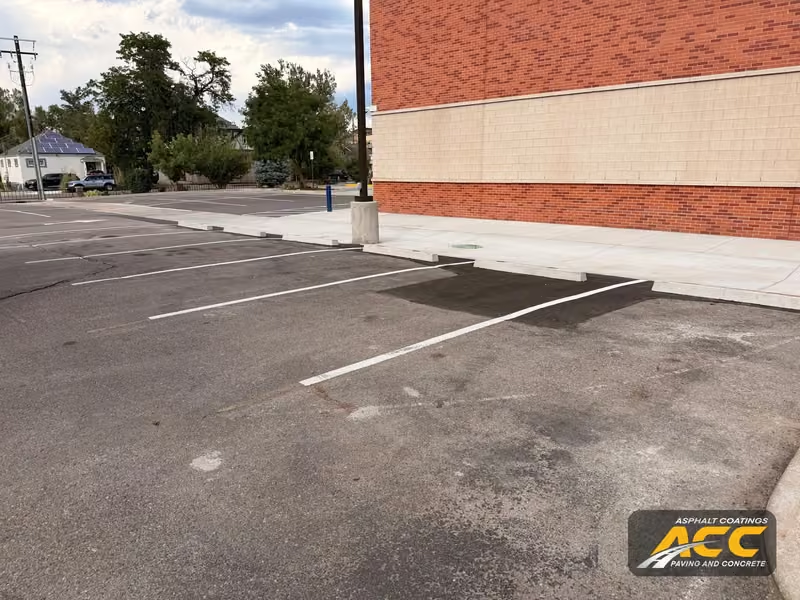
White lines lay out the stalls across the parking lot and along the building, where concrete wheel stops went in after the paint.
ADA Stalls
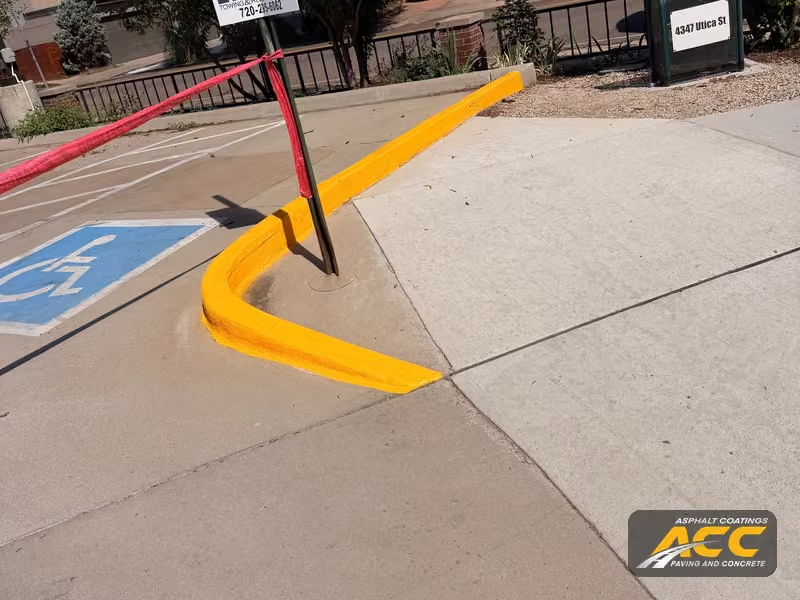
At the school entrance, blue accessible symbols and hatched access aisles mark the ADA stalls.
Reserved Stalls
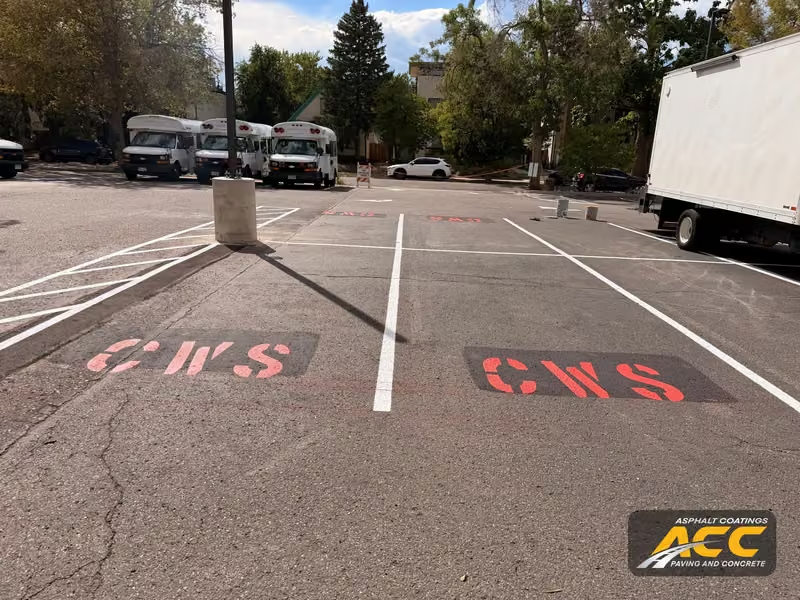
Red “CWS” stencils, each painted on a black backing, hold a row of spaces for the school.
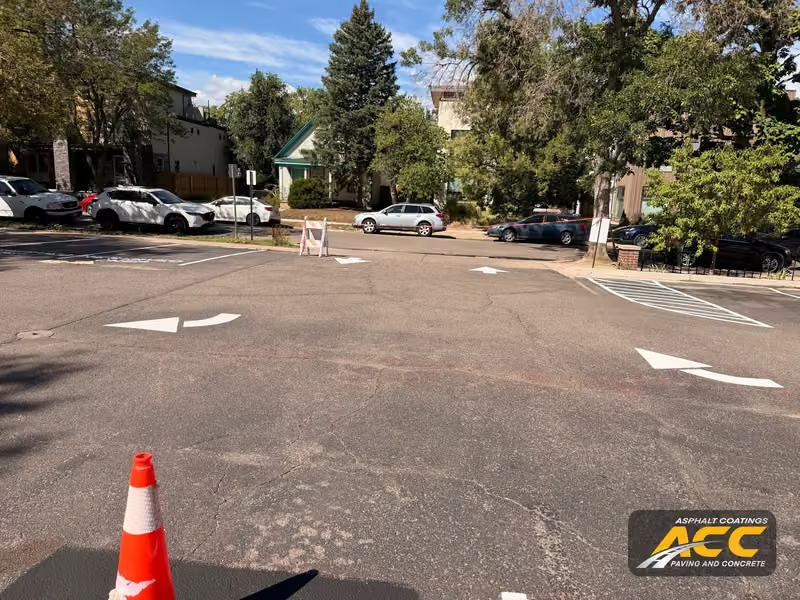
Traffic Arrows
Drivers follow white arrows through the drive aisle.
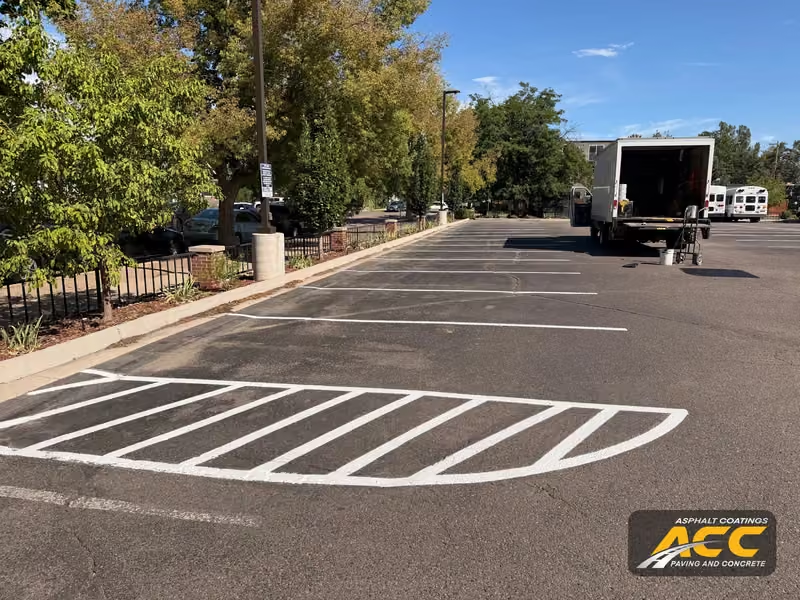
No-Parking Area
Diagonal hatching closes off the end of one row so nobody parks there.
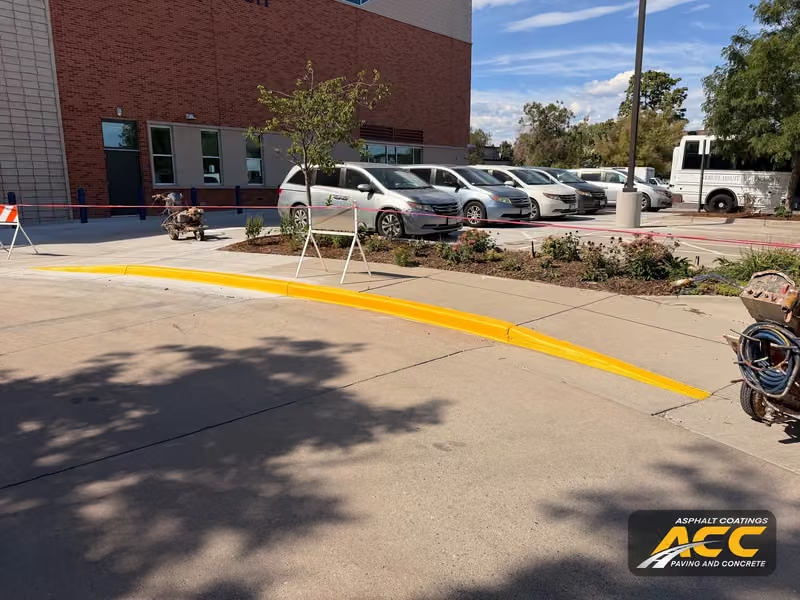
Curb Paint
The curb beside an ADA stall and around a planted island is painted yellow.


What We Stripe and Mark in Denver Parking Lots
We paint stall lines, arrows, stop bars, crosswalks, fire lanes, loading zones and ADA stalls, and lay out new parking lots on fresh pavement.
Stall Lines
Standard stalls are 8.5 to 9 feet wide, painted in 4-inch lines by commercial airless striping machines at an even paint thickness.
New Layouts and Redesigns
On a freshly paved or sealcoated parking lot we draw the layout from scratch and snap chalk lines before any paint goes down.
When you restripe, we can copy the old layout or redesign it, working out the stall angle, drive lane width and end caps that fit the most stalls.
Arrows, Stop Bars and Crosswalks
Turn arrows, stop bars, yield markings and speed bump warnings steer cars through the parking lot. Where people cross, at entrances and drive lanes, we paint ladder or continental crosswalks.
Fire Lanes and No-Parking Zones
Fire lanes and no-parking areas are marked so emergency access stays clear. No-parking zones get hatched diagonal lines.
Loading Zones and Custom Stencils
For delivery and service vehicles, loading zones get yellow curb paint and LOADING ZONE stencils.
Custom stencils and logos carry your own markings, like the reserved-stall stencils at Arrupe Jesuit.
ADA Stalls
Accessible stalls get blue paint, wheelchair symbol stencils and striped access aisles. Van-accessible stalls get the wider aisle a side-loading van needs, with Van Accessible stenciled on the pavement.
Latex, Thermoplastic or Epoxy Striping
Traffic-grade latex suits most stall lines, thermoplastic suits crosswalks and fire lanes that take heavy traffic, and epoxy suits covered or indoor areas.
Traffic-Grade Latex
Used for stall lines, arrows and stencils on most of a parking lot.
An airless machine sprays it, and glass beads dropped into the wet paint make the lines show up at night.
Dries in 15 to 30 minutes.
Thermoplastic
Used for crosswalks, stop bars and fire lanes, where traffic is heavy and the marking matters for safety.
We heat it to 400 F and fuse it to the pavement, and its glass beads are mixed in from the start.
Sets in 3 to 5 minutes.
Epoxy
Used for garage floors and indoor or covered parking.
It goes on by roller or spray, with glass beads dropped in for visibility.
Cures in 4 to 6 hours.
ADA Rules When You Restripe a Denver Parking Lot
Restriping a Denver parking lot means the accessible spaces must meet the 2010 ADA Standards.
The Department of Justice says a business that restripes its parking lot must provide accessible parking spaces as the 2010 ADA Standards require. Under section 502 of those Standards a car space is at least 96 inches wide, a van space at least 132 inches (or 96 inches beside a 96-inch aisle), and every accessible space has an access aisle next to it.

Before striping begins, we check these on every parking lot.
- How many accessible spaces the parking lot needs for its total count
- Van-accessible stall dimensions
- Access aisle widths
- Where detectable warning surfaces sit
- Curb ramp slopes
Then we mark the accessible stalls with these.
- Blue paint and wheelchair symbol stencils
- Striped access aisles beside each stall
- A wider aisle for each van-accessible stall
- Van Accessible stenciled on the pavement
We make that check at the free on-site assessment, and the written proposal shows the stall layout it calls for.
When to Stripe a Parking Lot in Denver
Stripe in dry weather above 50 F, and always restripe after sealcoating, because the sealcoat covers the old lines.
Traffic-grade latex needs air above 50 F and dry pavement to stick and cure. Thermoplastic can go down in slightly cooler weather, since the heat it is applied with makes its own bond, and we move the date when the forecast turns against paint.
In Denver that usually means the warm months: the median last spring freeze is May 5 and the median first fall freeze is October 9.

After sealcoating in Denver, we stripe once the sealcoat has cured, which typically takes 24 to 48 hours. Night, weekend and off-hours striping keeps the parking lot open while your business runs.
Faded lines are the other trigger. Check them often and plan to restripe about every 2 years; at the final walkthrough we leave a restriping schedule, and a parking lot maintenance calendar can carry it.
Frequently Asked Questions
These are the questions Denver property managers ask most about parking lot striping.
Cost and Licensing
How Much Does Parking Lot Striping Cost in Denver?
Cost depends on stall count and line footage, whether the layout is copied or redesigned, the number of accessible stalls and signs, fire lane and specialty markings, paint type and how the work is phased. You get it in writing, with itemized pricing, after the free on-site assessment. To book one, request a quote or contact the Denver Metro headquarters.
Is Asphalt Coatings Company Licensed in Denver?
Yes. Asphalt Coatings Company holds City and County of Denver ROW Asphalt License #00249954, and current documentation is available on request. We confirm the permits your project needs before we schedule it.
Scheduling
How Long Before Cars Can Park on New Lines?
That depends on the paint. Traffic-grade latex dries in 15 to 30 minutes, thermoplastic sets in 3 to 5 minutes and epoxy cures in 4 to 6 hours.
Can You Stripe at Night or on Weekends?
Yes. We stripe during nights, weekends and off-hours so the work does not get in the way of your business.
Do You Have to Restripe After Sealcoating?
Yes. Sealcoat covers every marking with a uniform black surface, so we plan sealcoating and restriping as one project and paint after the sealcoat cures.